Energy
Why grid storage is the hard part
Generating clean electricity is largely solved economically. Having it available at three in the morning in February is not.

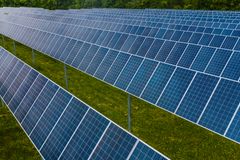
Solar and wind generation costs have fallen dramatically over two decades, to the point where new build is frequently the cheapest available generation.
That solves one problem and creates another, because both are variable and neither is dispatchable.
The mismatch
Electricity demand follows human activity: a morning rise, an evening peak, a night trough, with seasonal variation driven by heating and cooling.
Solar generation follows the sun, peaking at midday and vanishing at night. Wind follows weather, which correlates poorly with demand and can be low for days.
The result in high-solar grids is the shape frequently called the duck curve: net demand — total demand minus renewable generation — dips sharply midday and rises steeply into the evening peak.
That steep evening ramp is a genuine engineering problem. Something has to supply a large increase in output over a couple of hours, reliably, every day.
Storage durations, which are different problems
Sub-second to minutes. Frequency regulation and grid stability. Batteries do this exceptionally well and have largely displaced older approaches, because they respond faster than any thermal plant.
Two to eight hours. Shifting midday solar into the evening peak.
This is where lithium-ion grid batteries are being deployed at scale, and the economics now work in many markets without subsidy.
Days. Covering a still, overcast period. Sometimes called a wind drought or, in the German term that has entered the literature, a Dunkelflaute.
Lithium-ion at this duration is expensive, because cost scales with energy capacity and the asset cycles rarely.
Seasonal. Storing summer surplus for winter demand.
Effectively unsolved with batteries at any plausible cost. This is the genuinely open problem.
The technologies
Pumped hydro remains the overwhelming majority of installed storage worldwide. Mature, efficient, long-lived, and constrained by geography and by the difficulty of permitting new reservoirs.
Lithium-ion dominates new build for short duration. Costs have fallen sharply, and lithium iron phosphate chemistry has become the grid standard for its cycle life and thermal characteristics.
Sodium-ion uses abundant materials and has lower energy density, which matters little for stationary applications. Early commercial deployment is under way.
Flow batteries decouple power from energy — capacity is set by tank size — which suits longer durations. Deployment has been slower than proponents expected.
Thermal storage, heating a medium and recovering the energy later. Cheap per unit of energy, with round-trip efficiency penalties depending on the conversion.
Hydrogen, which can store energy indefinitely and suffers a substantial round-trip efficiency loss across electrolysis, storage and reconversion.
That loss makes it poor for daily cycling and potentially reasonable for seasonal storage, where the alternative is having nothing.
What else solves the same problem
Storage is one answer among several, and frequently not the cheapest.
Transmission. Moving power between regions with uncorrelated weather reduces the need to store it. It is generally cheaper per unit than storage and much harder to permit.
Demand flexibility. Shifting when electricity is used — water heating, EV charging, industrial processes — is the cheapest form of balancing available and is barely exploited.
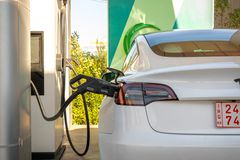
Managed EV charging is particularly promising, since a fleet of vehicles is a large distributed storage resource that is mostly parked.
Overbuilding. Installing more renewable capacity than average demand requires, accepting curtailment when generation exceeds need. As capital costs fall, this becomes cheaper than storing the surplus.
Firm low-carbon generation — nuclear, geothermal, hydro — which reduces how much storage the system needs at all.
Round-trip efficiency, compared
Worth setting out plainly, because it drives most of the technology choice.
Pumped hydro returns roughly seventy to eighty percent of the energy put in. Lithium-ion returns close to ninety. Compressed air, depending on how the heat of compression is handled, considerably less. Hydrogen, across the full cycle, in the region of a third.
For a resource cycling daily, that difference compounds: an eighty percent round trip cycled three hundred times a year loses far less in total than a thirty-five percent one.
For a resource cycling twice a year, efficiency matters much less than capital cost per unit of energy stored — which is exactly why the technology answer differs so sharply by duration.
The realistic picture
Short-duration storage is a solved commercial problem and is being built rapidly.
Multi-day storage is technically possible and economically awkward.
Seasonal storage does not have a good answer, which is why most credible decarbonisation pathways include some firm generation rather than assuming storage covers everything.
Anyone claiming the problem is solved, or that it is insoluble, is skipping the part where the answer depends entirely on duration.