Energy
Demand flexibility: the cheapest thing nobody buys
Shifting when electricity is used costs almost nothing and displaces generation, storage and network investment. Most of it remains unexploited.
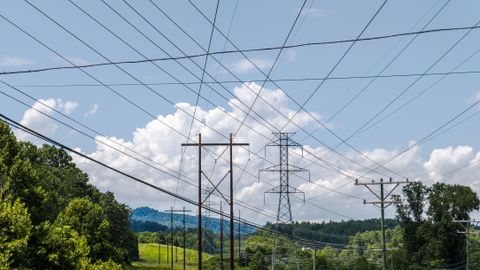
Every discussion of balancing a renewable grid concentrates on supply — more storage, more generation, more transmission. The demand side is cheaper and receives a fraction of the attention.
What flexibility means here
Not using less electricity. Using it at a different time.
Many loads are indifferent to exact timing: water heating, electric vehicle charging, space heating and cooling within a comfort band, refrigeration within a temperature band, industrial processes with buffer storage, and data centre workloads that can be deferred.
For all of these, when the electricity is consumed matters far less to the user than that it is consumed.
Why it is so valuable
It displaces peaking generation. Plants that run for a few hours a year to cover peak demand are the most expensive capacity on any system. Reducing peak avoids building them.
It defers network reinforcement. Distribution networks are sized for peak. Shaving the peak defers investment that would otherwise be required.
It substitutes for storage. Moving a load to when generation is abundant achieves the same thing as storing energy and moving it, without the round-trip loss or the capital cost.
It absorbs surplus. Where midday solar would otherwise be curtailed, flexible load turns waste into use.
It responds fast. Aggregated loads can respond in seconds, which makes them competitive in frequency response markets.
The thermal storage that already exists
The largest untapped resource, and it is already installed.
A domestic hot water cylinder is a thermal battery. Heating it when electricity is cheap and drawing hot water later is storage with no additional hardware beyond a controllable element.
Buildings themselves have thermal mass. Pre-heating or pre-cooling by a degree or two shifts hours of heating and cooling load with no perceptible effect on occupants.
Refrigerated warehouses are enormous thermal stores that can be cycled within safe temperature bands.
None of this requires new technology. It requires controls and a reason to use them.
Why so little is exploited
Tariffs do not signal. Most consumers pay a flat rate. There is no reason to shift because there is no price difference.
Where time-of-use pricing exists, response is substantial and immediate — which demonstrates that the constraint is the price signal rather than willingness.
Market design excludes small participants. Flexibility markets were built for large generators, with minimum capacity thresholds, metering standards and settlement processes that a household cannot meet.
Aggregators exist to pool many small loads into a market-eligible resource. Regulatory permission for that varies enormously by jurisdiction and has been slow.
Measurement and verification. Paying for load reduction requires establishing what would have been consumed otherwise — a counterfactual that is genuinely hard to measure and easy to game.
Split incentives. A landlord installs the equipment; a tenant receives the savings. This blocks a great deal of building efficiency and flexibility investment.
Nobody's job. A network operator saving on reinforcement, a system operator saving on balancing and a supplier saving on wholesale purchase all benefit, and the mechanism to combine those values into one payment frequently does not exist.
Where it works well
Industrial demand response, long established. Large consumers with interruptible processes have participated in reserve markets for decades.
Electric vehicle charging, the fastest-growing resource. Overnight tariffs shift charging almost completely, and managed charging goes further by avoiding the synchronised spike at the tariff boundary.
Domestic hot water and storage heating, which some countries have controlled centrally via radio signal for decades — a system that predates the current interest entirely.
Data centres, increasingly. Deferrable batch workloads can be scheduled against grid conditions, and some operators have begun doing so explicitly.
What would unlock the rest
Time-of-use tariffs as the default rather than an option, with protections for consumers unable to shift.
Market rules that allow aggregated small loads to participate on equal terms.
Interoperability standards so that appliances, chargers and controllers respond to a common signal rather than each requiring a proprietary app.
Smart metering with settlement at sufficient granularity to make any of it billable.
All of which is administrative, and none of which requires anything to be invented — which is precisely why it is frustrating that it remains the least-developed part of the transition.