Energy
Solar economics: what actually changed
Module prices fell by orders of magnitude over four decades, and the interesting question is what now dominates the cost instead.

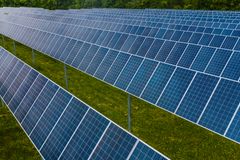
Photovoltaic module prices have fallen by something close to three orders of magnitude since the 1970s, and continued falling through the 2010s and 2020s at a rate that consistently outpaced forecasts.
Understanding why matters, because it is the clearest case study in how a technology becomes cheap.
The learning curve
Solar has followed a learning rate — a consistent percentage cost reduction for each doubling of cumulative production — of roughly twenty percent, sustained over decades.
The mechanism is not a single breakthrough. It is the accumulation of incremental improvements: thinner wafers, less silver paste, higher cell efficiency, larger factories, better yields, cheaper polysilicon, automated handling.
Each is small. Compounded over a very large number of production doublings, they are enormous.
The policy implication is significant: deployment subsidies that drove early volume were, in effect, buying down the cost of the technology for everyone afterward.
What the module no longer dominates
The consequence of module prices collapsing is that they are now a minority of an installed system's cost.
The remainder — usually called balance of system — includes inverters, mounting structures, wiring, labour, land, grid connection, permitting, financing and developer margin.
These have fallen far less, because they are not manufactured objects benefiting from a learning curve. They are construction and administration.
Which is why installed costs vary enormously between countries with access to identical modules. The difference is permitting time, labour cost, interconnection process and financing — not the panels.
Residential rooftop solar shows this most starkly: the module might be a small fraction of what a household pays, with soft costs dominating.
Financing is now a primary variable
An underappreciated point.
Solar has almost no fuel cost and high upfront capital cost. Which means the levelised cost of its electricity is extremely sensitive to the cost of capital.
A project financed at four percent and the identical project financed at nine percent produce electricity at substantially different costs. Nothing physical has changed.
This is why interest rate movements have affected renewable deployment more than they affect fossil generation, and why policy that reduces perceived project risk lowers cost as effectively as technical improvement.
The value problem
The issue that follows success.
As solar penetration rises, generation becomes concentrated in the same hours across a region. Prices in those hours fall — in some markets to zero or negative.
Which means the marginal solar project earns less than the average, a phenomenon usually called value deflation or cannibalisation.
Low costs therefore do not translate straightforwardly into unlimited deployment. Past a point, the economics depend on storage, transmission, demand shifting or export.
This is the real constraint on high-penetration solar, and it is an economic constraint rather than a technical one.
Manufacturing concentration
The supply chain — polysilicon, wafers, cells, modules — is heavily concentrated in China, which achieved that position through scale, integration and sustained industrial policy.
Other regions are attempting to build domestic capacity through subsidy and tariff, which raises costs in the short term and is being pursued for supply security and industrial policy reasons rather than cost ones.
Whether that trade is worthwhile is a political judgement rather than an engineering one, and it should be argued on those terms.
Where the technology goes next
Efficiency. Commercial silicon cells have moved through successive architectures, each squeezing out a little more. The theoretical limit for a single-junction silicon cell is around thirty-three percent, and production cells are now within striking distance of the practical ceiling.
Tandem cells, stacking perovskite on silicon to capture more of the spectrum, offer a route past the single-junction limit. Laboratory results are well above silicon alone.
The obstacle is durability. Perovskites degrade under heat, moisture and ultraviolet exposure, and a module needs to last decades in the weather. This is the entire commercialisation question.
Bifacial modules and tracking, which increase yield per module at modest additional cost, are already standard in utility-scale build.
The headline to hold onto is that the panel stopped being the problem some time ago. Everything interesting now happens around it.