Electric Vehicles
Charging infrastructure: the problems that are not technical
Chargers fail for reasons of payment systems, grid connections and maintenance contracts far more often than for reasons of engineering.
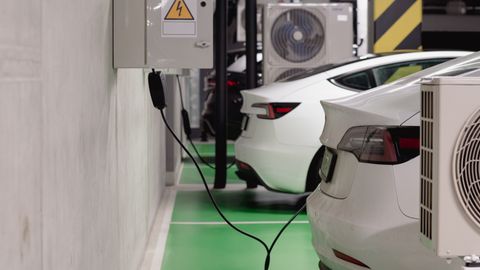
Ask an EV owner what needs fixing and the answer is rarely range. It is that the charger they drove to was broken, occupied, or refused their card.
What reliability studies actually find
Independent surveys of public charging in several markets have repeatedly found failure rates that would be intolerable in a petrol station — a meaningful minority of attempts ending without a successful charge.
The failures cluster in a few categories, and almost none of them are power electronics.
Payment and authentication. Card readers that do not read, apps that will not authenticate, roaming agreements that fail between networks.
Software and communication. The handshake between vehicle and charger failing, or the charger unable to reach its back office to authorise a session.
Physical damage. Cut cables, damaged connectors, vandalism.
Blocked or occupied stalls, including vehicles left plugged in long after charging completes.
Maintenance backlog. A charger reported faulty and not repaired for weeks, because nobody's contract makes it urgent.
Why the incentives produce this
A petrol station's entire revenue depends on pumps working. A charging network's revenue per site is much smaller, the capital cost is high, and utilisation in the early years is low.
Which means a broken charger costs the operator very little in the short term, and dispatching a technician costs a great deal.
Several jurisdictions have responded by attaching uptime requirements to subsidy programmes — a sensible intervention, and it depends entirely on how uptime is defined and measured.
An operator can report high uptime while a customer experiences failure, if uptime is measured as the unit being powered and network-connected rather than as sessions successfully completed.
The connector situation
A source of confusion that is slowly resolving.
Multiple DC fast charging standards exist and have coexisted awkwardly. The North American market has converged on a single connector after a series of manufacturer announcements, with adapters bridging the transition. Europe standardised earlier on a different one.
The practical implication for a buyer is to check what the car has, what adapters exist, and which networks are usable — a question that is finally becoming simpler rather than more complicated.
The grid connection problem
The constraint that determines where chargers can be built at all.
A site with several high-power stalls needs a substantial connection. In many places, obtaining one involves a queue measured in months or years and a contribution to network reinforcement costs.
Which is why sites appear in odd places — where a connection already existed — rather than where drivers would choose.
On-site battery storage is increasingly used to buffer this, letting a site deliver high peak power from a modest connection. It adds capital cost and removes a scheduling constraint, which is frequently the better trade.
The home charging asymmetry
The single largest determinant of whether EV ownership is convenient, and it is a housing question rather than an automotive one.
A household with off-street parking charges overnight at low cost, uses public charging only on long trips, and rarely thinks about it.
A household without off-street parking depends entirely on public infrastructure, pays substantially more per kilowatt-hour, and experiences every reliability failure directly.
This gap is large, it correlates with income and housing type, and it is the main equity issue in the transition.
Responses being tried include on-street charging integrated into lamp posts, cross-pavement cable channels, kerbside bollards and workplace charging mandates. None has yet been deployed at a scale that closes the gap.
What good looks like
From the experience of the networks that perform best:
Contactless card payment that works without an app or account.
Live status data, accurate, published openly so navigation systems can route around faults.
Plug-and-charge authentication, where the vehicle and charger authenticate automatically and the session simply starts.
Redundancy — several stalls per site, so one failure is an inconvenience rather than a wasted journey.
Lighting, shelter and somewhere to buy a coffee, because a twenty-minute stop at a dark industrial estate is a different experience from the same stop at a service area.
Preventive maintenance rather than reactive, which is the difference the uptime figures actually reflect.
The trajectory
Reliability has improved measurably as networks mature and as competition arrives.
The remaining problems are commercial and regulatory: how uptime is defined, who pays for grid connections, and whether operators face a real cost for a broken unit.
None of that is an engineering problem, which is precisely why it has taken longer to fix than the engineering did.