Robotics
Humanoid robots and the demo-to-product gap
A robot that walks across a stage is solving a different problem from a robot that works an eight-hour shift.
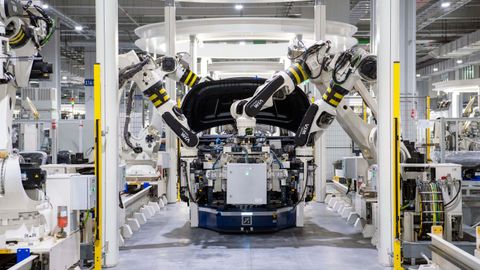
Humanoid robot demonstrations have improved dramatically. Whether that translates into deployed systems depends on a set of problems the demonstrations are specifically designed not to test.
What has genuinely improved
Locomotion. Dynamic balance on legs was a hard research problem and is now substantially solved for many environments, using a combination of model-based control and learned policies.
Actuators. Cheaper, more capable electric actuators with better torque density have replaced the hydraulics that made earlier machines expensive and impractical.
Perception. Vision systems benefiting directly from the last decade of machine learning are far better at identifying and localising objects.
Learned control. Policies trained in simulation and transferred to hardware now handle contact-rich tasks that were previously hand-engineered per task.
None of that is trivial and all of it is real.
The problems that decide deployment
Manipulation, not locomotion. The gap that matters.
Walking is a well-characterised control problem with a low-dimensional objective. Grasping an unfamiliar object, in an unknown pose, with unknown mass and friction, and doing something useful with it, is not.
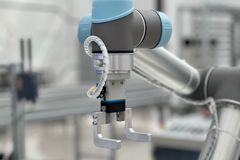
Human hands are extraordinary and the tactile sensing behind them is largely unreplicated. Most working robots use simple grippers because dexterous hands are expensive, fragile and hard to control.
Reliability. A demonstration succeeds if it works once on camera. A deployment needs it to work thousands of times.
A task with ninety-five percent success sounds impressive and fails once every twenty attempts. In a process with several sequential steps, per-step reliability compounds downward quickly.
Industrial automation targets failure rates far below what current general-purpose systems achieve, because a stoppage costs more than the robot saves.
Speed. Many demonstrations run slower than a person. A robot that costs as much as several years of wages and works at half human pace is not an economic proposition.
Cost. Including not just the unit but installation, integration, maintenance, spares, downtime and the engineering time to make it work in a specific facility.
Integration cost has historically exceeded hardware cost in industrial automation, frequently by a large multiple.
Safety. A heavy machine moving near people is a regulated hazard. Collaborative operation imposes force and speed limits that reduce throughput.
Why humanoid form at all
The argument for it is genuine: the built environment is designed around human dimensions — stairs, door handles, tools, workbench heights — so a human-shaped machine can in principle use it without modification.
The argument against is equally genuine: legs are a hard, expensive and failure-prone way to move across a flat floor, and two arms with five-fingered hands is a hard way to do most single tasks.
Purpose-built machines beat general-purpose ones on any specific task, which is why warehouses are full of wheeled units and fixed arms rather than androids.
The humanoid bet is that generality eventually beats specialisation on total cost across many tasks. That is a plausible bet, and it is not yet demonstrated.
How to read a demonstration
Ask whether it is teleoperated. Many impressive manipulation videos involve a human operator, which is a legitimate research and data-collection technique and tells you nothing about autonomy.
Ask how many takes. Ask whether the environment was staged, whether objects were in known positions, and whether the video is at real speed.
Ask about duty cycle — how long it runs between charges and interventions.
Ask what the intervention rate is in the deployed setting, which is the number that actually determines whether it saves labour.
Where robots are actually working
Worth stating, because the answer is undramatic and large.
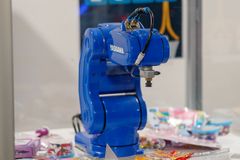
Fixed industrial arms, in enormous numbers, doing repetitive high-precision tasks in structured environments.
Autonomous mobile robots moving goods around warehouses, which is a solved and rapidly growing category.
Agricultural machinery with increasing autonomy.
Surgical systems, which are teleoperated rather than autonomous and are genuinely transformative in their niche.
The pattern is consistent: robots succeed where the environment can be structured to suit them. The humanoid proposition is a bet on removing that requirement, which is exactly why it is difficult.