Robotics
Safety standards and how robots are allowed near people
The rules governing industrial robots are specific, well developed, and the reason most machines still work behind a fence.
Any discussion of robots working alongside people runs into a body of safety standards that is more developed than most people realise and that determines what is actually deployable.
The traditional approach: separation
Conventional industrial robots are fast, strong and unaware. A large arm moving at speed will injure anyone it strikes.
The standard response is physical separation: fencing, interlocked gates, light curtains and pressure mats that stop the machine if the space is entered.
This is effective and it is why factory automation looks the way it does. It also consumes floor space and makes reconfiguration expensive, which is a real cost.
Collaborative operation
The standards define several distinct modes by which a robot may operate in shared space, and the distinction matters.
Safety-rated monitored stop. The robot stops when a person enters the shared workspace and resumes when they leave. Simple, and it means no simultaneous work.
Hand guiding. The operator moves the robot directly using a device with an enabling switch. Used for teaching and for assisted lifting.
Speed and separation monitoring. The system tracks the person's position and reduces robot speed as separation decreases, stopping before contact is possible.
This allows genuine simultaneous work and requires reliable person-tracking sensors.
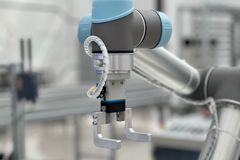
Power and force limiting. The robot is designed so that contact cannot cause injury above a defined threshold.
This is the mode most people mean by collaborative robot, and it is the most restrictive in performance terms — force limits mean low speed and low payload.
The point that gets missed
Collaborative is a property of the application, not of the robot.
A force-limited arm holding a sharp blade, or a hot tool, or a heavy workpiece with pinch points, is not safe merely because the arm is rated collaborative.
The risk assessment covers the whole system: robot, tool, workpiece, environment and task. Standards make this explicit and it is routinely misunderstood in marketing.
Where the force limits come from
Worth knowing because it is unusual.
The permissible contact forces and pressures are derived from research into human pain thresholds, mapped by body region.
The head and face have much lower limits than the upper arm. Which means a permissible contact speed depends on which part of the body could be struck, and therefore on the geometry of the workcell.
This is a genuinely thoughtful piece of standards work and it constrains design considerably.
Mobile robots
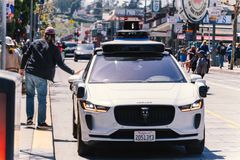
Governed by a separate standard covering autonomous mobile robots and industrial vehicles.
Requirements include obstacle detection, defined stopping distances, speed limits in shared areas, audible and visual warnings, and emergency stops.
The difficulty is that a mobile robot's safe stopping distance depends on speed, load and floor condition, and its sensors must detect a person lying down as well as standing.
Functional safety
The underlying framework, and the reason safety-rated components cost what they do.
A safety function must have a demonstrated reliability — a performance level or safety integrity level — established through architecture, component failure rates, diagnostic coverage and testing.
Which means an emergency stop is not simply a switch. It is a rated circuit with redundancy and monitoring, certified to a level appropriate to the assessed risk.
This is why safety-rated sensors and controllers are substantially more expensive than functionally identical standard components, and why substituting one for the other is not permissible.
What this means for humanoids and general-purpose robots
A significant obstacle that receives little attention in capability discussions.
A machine that is heavy, mobile, and operating in unstructured space alongside people has to satisfy this framework somehow.
Force-limiting a heavy machine that must also lift things is a genuine engineering conflict. Speed and separation monitoring requires reliable tracking of people in cluttered environments.
And the standards assume a defined task in a defined space, which is exactly what a general-purpose robot is supposed not to have.
The standards bodies are working on this. It is not a solved question, and it constrains deployment as firmly as any technical limitation.
Consumer robots
A different regime again, governed by general product safety and appliance standards rather than industrial machinery rules.
Which is why domestic robots are small, light and slow — those properties keep them within a regulatory framework that does not require the full industrial apparatus.
Any domestic machine strong enough to be genuinely useful for physical tasks would leave that regime, and what replaces it is not yet defined.
Also by Tobias Nkemelu
- Buying robots: the questions that matterRobotics
- What to actually worry about with AIAI & Compute
- Legged robots: what they are forRobotics
- Where AI systems actually fail in productionAI & Compute