Electric Vehicles
Self-driving levels, and why the numbers mislead
A six-point scale describing who is responsible, routinely used as if it described how good the software is.
The automation levels published by the Society of Automotive Engineers are a taxonomy of responsibility, not a measure of capability. Almost every popular use of them gets this backwards.
What the levels actually say
Level 0. No automation of the driving task. Warnings and momentary interventions like automatic emergency braking sit here, which surprises people.
Level 1. The system controls either steering or speed, not both. Adaptive cruise control alone, or lane keeping alone.
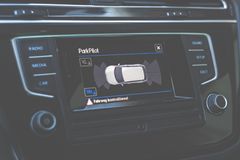
Level 2. The system controls steering and speed simultaneously. The driver remains responsible for monitoring and must intervene at any moment.
Essentially every consumer "self-driving" feature on sale is Level 2, regardless of its name.
Level 3. The system handles the entire driving task within a defined domain, and the driver may disengage attention — but must be available to take over when the system requests, with a transition period.
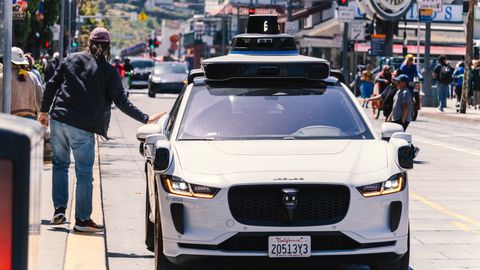
Level 4. Full automation within a defined operational design domain. No driver intervention required inside that domain; the vehicle can bring itself to a safe stop.
Level 5. Anywhere a human could drive, in any conditions. Nothing approaches this and it may not be a useful target.
The Level 2 to 3 discontinuity
The most important thing in the taxonomy, and it is a legal boundary rather than a technical one.
At Level 2, if the vehicle crashes, the driver is responsible. At Level 3, within the defined domain, the manufacturer is.
Which explains why manufacturers have been slow to certify Level 3 systems even where the technology might support it. Moving from Level 2 to Level 3 transfers liability, and that is a commercial decision as much as an engineering one.
A small number of Level 3 systems have been approved in specific jurisdictions, restricted to motorway driving below a modest speed in congested traffic, in good conditions, on mapped roads.
Those restrictions are the operational design domain, and they are the actual product.
The operational design domain
The concept that matters more than the level number.
An ODD specifies where and when a system is validated to operate: road types, speed range, weather, lighting, geography, traffic conditions.
A Level 4 system with a narrow ODD — a mapped urban area, in fair weather, at moderate speed — is a real product and a limited one. A Level 2 system with no ODD restriction is available everywhere and requires constant supervision.
Comparing them by level number tells you almost nothing. Comparing them by ODD tells you what they do.
The supervision problem
The known failure mode of Level 2.
Human beings are poor at monitoring an automated system that usually works. Vigilance decays, attention drifts, and the moments requiring intervention are precisely the rare, sudden ones.
This is well established in aviation and process control literature long before it appeared in cars.
The mitigations — driver monitoring cameras, torque sensors on the wheel, escalating alerts — help and do not eliminate it. Systems that perform well most of the time induce more complacency than systems that perform poorly.
Which produces the uncomfortable conclusion that an improving Level 2 system can become more dangerous before it becomes safer, if improvement outpaces the driver's calibration of when to intervene.
Sensors
A live technical argument worth understanding.
Cameras are cheap, high resolution, and provide the semantic information — reading signs, identifying lane markings — that other sensors cannot. They struggle with direct sun, darkness, precipitation and estimating distance directly.
Radar measures range and closing speed directly and works through weather. Low resolution, historically poor at distinguishing stationary objects from infrastructure.
Lidar produces precise three-dimensional geometry regardless of lighting. Historically expensive, now much less so, and degraded by heavy precipitation.
The camera-only position argues that humans drive with vision alone, that sensor fusion introduces conflicts requiring arbitration, and that cost matters at scale.
The multi-sensor position argues that redundancy across different physical principles is how safety-critical systems are normally built, and that human vision is paired with a brain nobody can replicate.
Both positions have serious engineers behind them, and deployed Level 4 services have overwhelmingly used lidar.
Reading a safety claim
Disengagement rates are reported in some jurisdictions and are close to meaningless for comparison — they depend on where the testing happened and on internal reporting policy.
Miles per intervention says nothing without knowing the road type and conditions.
Comparisons to human crash rates are frequently apples to oranges: the automated miles are on mapped, geofenced, fair-weather roads and the human baseline includes everything.
The useful figures are incidents per mile within a stated ODD, compared against human performance in the same conditions, with all contacts reported rather than only injuries.
A few operators publish something close to this. Most do not.