Energy
Nuclear power and the data centre question
A technology with an unusual cost structure meeting a customer with an unusual demand profile, and a set of claims worth checking.
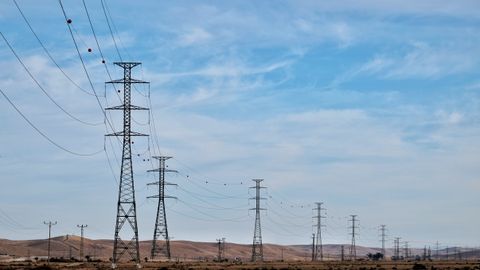
Nuclear power has returned to the conversation largely because data centre operators want firm, continuous, low-carbon electricity, and few other sources supply all three.
Why the demand profile fits
A data centre is close to a constant load. It runs at high utilisation around the clock, every day, and values reliability extremely highly — an outage costs far more than the electricity.
That is almost the ideal customer for nuclear generation, which has very high capital cost, very low marginal cost, and performs best running continuously at full output.
Renewables plus storage can serve the same load and require substantially more storage than a variable load would, because there is no demand flexibility to exploit.
Which is why several operators have signed agreements with existing nuclear plants, and why proposals to restart retired reactors have found willing counterparties.
Existing plants versus new build
The distinction that matters most and gets blurred.
Existing reactors have their capital cost sunk. Their marginal cost is low and their output is firm. Contracting their output, or extending their operating licences, is straightforwardly economic.
Several agreements announced as nuclear-for-AI deals are of this kind. They are real and they add no new generation to the system — they reassign existing clean generation to a new customer, which raises a legitimate question about what displaces it elsewhere.
New build is a different proposition entirely. Recent large reactor projects in Western countries have been delivered years late and multiples over budget, for reasons including first-of-a-kind engineering, supply chain atrophy, regulatory change during construction and loss of skilled trades.
Countries that build continuously have achieved better outcomes, which suggests the problem is partly one of lost industrial capability rather than of the technology itself.
Small modular reactors
The proposal generating most of the current interest.
The argument: build smaller units in a factory rather than large ones on site, gaining the learning-curve benefits of series production, reducing financing risk by shortening construction, and allowing capacity to be added incrementally.
The argument against: nuclear economics have historically favoured scale, because much of the cost — containment, control room, security, staffing — does not shrink proportionally with output.
Series production is supposed to overcome that. Whether it does depends on building enough units to descend the learning curve, which requires an order book that does not yet exist.
The candid position is that the concept is plausible, several designs are in licensing, a small number are under construction, and no Western SMR has yet demonstrated the cost that the argument depends on.
At least one prominent project was cancelled after projected costs rose and subscribers withdrew, which is the relevant cautionary datum.
The timeline problem
Data centre demand is arriving now. New nuclear capacity, even optimistically, arrives in the 2030s.
Which means nuclear cannot serve near-term demand growth regardless of its merits. The near-term options are existing generation, gas, renewables with storage, and demand-side measures.
This mismatch is worth keeping in view when reading announcements. An agreement to purchase power from a reactor that does not exist yet is a commitment, not a supply.
The honest case for nuclear
It is firm, low-carbon, land-efficient and materially efficient per unit of energy, and its safety record measured in deaths per unit of energy is among the best of any source.
Deep decarbonisation studies frequently find that some firm low-carbon generation substantially reduces total system cost compared with a renewables-and-storage-only path, because it removes the need for extreme storage build-out.
The honest case against
Cost and construction risk in Western markets, which is empirical rather than theoretical.
Long lead times relative to the pace of demand change.
Waste, which is technically manageable and politically unresolved in most countries.
Public acceptance, which varies and constrains siting.
And the opportunity cost question: the same capital deployed in renewables, storage and transmission delivers more clean energy sooner in most current cost scenarios.
What to watch
Whether any SMR delivers on cost and schedule. That single data point will settle much of the argument.
Whether restarted and life-extended reactors deliver as expected.
And whether the data centre demand that is currently justifying these commitments actually materialises at the projected scale, because a great deal of infrastructure planning is now resting on demand forecasts that are themselves uncertain.