Space
Small satellites and what changed about spacecraft
A standardised form factor originally intended for teaching turned into a serious platform, and the consequences run through the whole industry.
A standard defined in 1999 for university projects — a ten-centimetre cube with a mass limit — became the basis for a large commercial industry.
Why standardisation mattered
Before it, every satellite was bespoke and every launch integration was a custom engineering exercise.
A standard form factor meant deployers could be standardised, integration became routine, and rideshare became a product rather than a negotiation.
It also created a component market. Once many people needed the same size of reaction wheel, radio, star tracker and solar panel, suppliers appeared, and prices fell by orders of magnitude relative to traditional space-qualified hardware.
That component ecosystem is the actual revolution. The cube was just the interface that made it possible.
The reliability trade
Traditional spacecraft engineering is built around never failing: extensive redundancy, exhaustively qualified components, and testing programmes costing more than the hardware.
Small satellite practice accepted a different bargain: use commercial components, test less exhaustively, accept a higher failure rate, and compensate with numbers and short replacement cycles.
For a mission where losing one of many satellites is tolerable, this is a rational trade and it produces far more capability per unit of spending.
For a mission with a single spacecraft and no replacement, it is not, which is why deep-space and flagship science missions still build the traditional way.
What small satellites do well
Earth observation constellations. Many satellites give high revisit rates — imaging the same location daily or more often — which is frequently more valuable than higher resolution from a single expensive satellite.
Daily global imagery at moderate resolution has enabled applications that annual high-resolution imagery could not: agricultural monitoring, deforestation detection, infrastructure change, and verification of claims about activity on the ground.
Communications constellations, discussed elsewhere.
Technology demonstration. Flying a new component cheaply to establish heritage, which then permits its use on larger missions.
Radio occultation for weather, where many small receivers measuring GPS signals through the atmosphere produce atmospheric profiles that improve forecasting measurably.
Education and capability building, the original purpose, which has allowed many countries and universities to build a space programme at accessible cost.
The limits
Aperture. Optical resolution is bounded by telescope diameter, and diameter is bounded by the spacecraft. No amount of processing overcomes the physics.
Which means very high resolution imaging still requires large spacecraft.
Power. Solar array area is limited by the body and by deployable structures, which constrains transmitter power and instrument capability.
Propulsion. Small propulsion systems have improved substantially — electric propulsion at these scales is now available — and delta-v budgets remain modest.
Thermal control is harder at small scale, because there is less mass to buffer temperature swings.
The debris consideration
Cheap access produced a large increase in objects launched, many without propulsion and therefore unable to manoeuvre or deorbit deliberately.
The mitigating factor is altitude: most small satellites operate low enough that drag removes them within a few years.
Licensing has tightened, and requirements for deorbit capability or demonstrably short orbital lifetime are increasingly standard.
The rideshare economics
Worth understanding because it is what made the platform accessible.
A dedicated launch places one payload where it wants to go. A rideshare mission fills a vehicle with dozens or hundreds of small payloads bound for a single orbit on the operator's schedule.
Per-kilogram prices on rideshare are a fraction of dedicated launch, and the customer accepts the destination and the date.
For a constellation operator that is frequently fine, since the satellites can raise or lower orbit themselves over subsequent weeks using onboard propulsion.
For a mission requiring a specific orbit or a specific launch window, it is not, and dedicated small launch vehicles exist to serve exactly that requirement at higher cost per kilogram.
The result is a genuine market segmentation that did not exist fifteen years ago, and the availability of cheap rideshare has done at least as much for small satellite adoption as any improvement in the satellites themselves.
The manufacturing shift
The most consequential downstream effect.
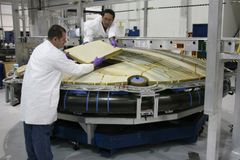
Traditional satellite manufacturing built one or a few units, by hand, over years.
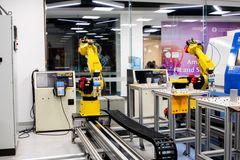
Constellation operators build hundreds or thousands on production lines, with automated assembly, standardised test, and unit costs that are not comparable to the traditional model.
That production capability, more than any individual satellite, is the asset — and it is what makes rapid replacement and short design lives economically sensible.
What to watch
Whether the reliability trade holds as constellations age, since replacement economics depend on failure rates staying within projections.
Whether component supply chains, now serving a large market, continue to reduce cost.
And whether deorbit compliance is actually enforced, because the low-altitude self-cleaning argument only holds if operators keep flying low.