Robotics
Why Mobile Robots Struggle With Doors And Elevators
Buildings are designed around people who can open, hold and press things, so autonomous machines need either integration with building systems or human help at every threshold.

Delivery and service robots navigate corridors reliably and then stop at a doorway. The difficulty is not navigation; it is that a building expects an occupant with hands.
A door is a manipulation problem in a mobile package
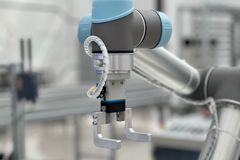
Opening a door requires grasping a handle, applying a specific motion, holding the door while moving through and clearing it without being struck as it closes.
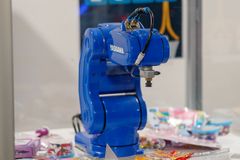
Most service robots have no arm, because adding one raises cost, weight, power draw and safety obligations substantially for a task performed a few times per trip.
The prevailing answer is to avoid the problem by asking the building to open the door instead.
Integration replaces manipulation
Automatic door controllers, elevator systems and access control can be commanded electronically, so the robot sends a request over the network rather than acting physically.
This works well and creates a dependency: the robot now requires building systems that speak a compatible protocol and an owner willing to connect them.
Retrofitting older American buildings is frequently the largest line item in a deployment, and it is why fleets concentrate in newer facilities.
Elevators add timing and social problems
A robot must call the elevator, know which car arrived, enter before the doors close, reach the correct floor and exit against people entering.
Even with integration, occupancy is unpredictable. A full car forces the robot to wait, and a machine positioned in the doorway blocks people who are in a hurry.
Operators handle this with etiquette rules encoded in behavior, such as yielding, retreating and waiting for the next car, which costs delivery time.
Thresholds, mats and floor transitions defeat wheels
Small vertical steps, thick carpet edges, floor drains and expansion joints are trivial for a person and can stop a wheeled base or knock a load off balance.
Larger wheels and suspension help but raise the deck height, which conflicts with reaching counters and shelves.
Site surveys before deployment therefore map floor conditions in detail, and some routes are excluded entirely on the basis of a single doorway.
Why human help is designed in
Most successful deployments assume occasional assistance, either from staff or from a remote operator who can intervene when the robot is stuck.
The economic question is how many interventions per shift a fleet requires, since remote staffing cost scales with that number and quietly determines whether the deployment saves anything.