Robotics
Teleoperation And The Latency Budget
Remote control of robots works only when the delay between action and feedback stays small, and every millisecond is allocated across sensing, network and display.
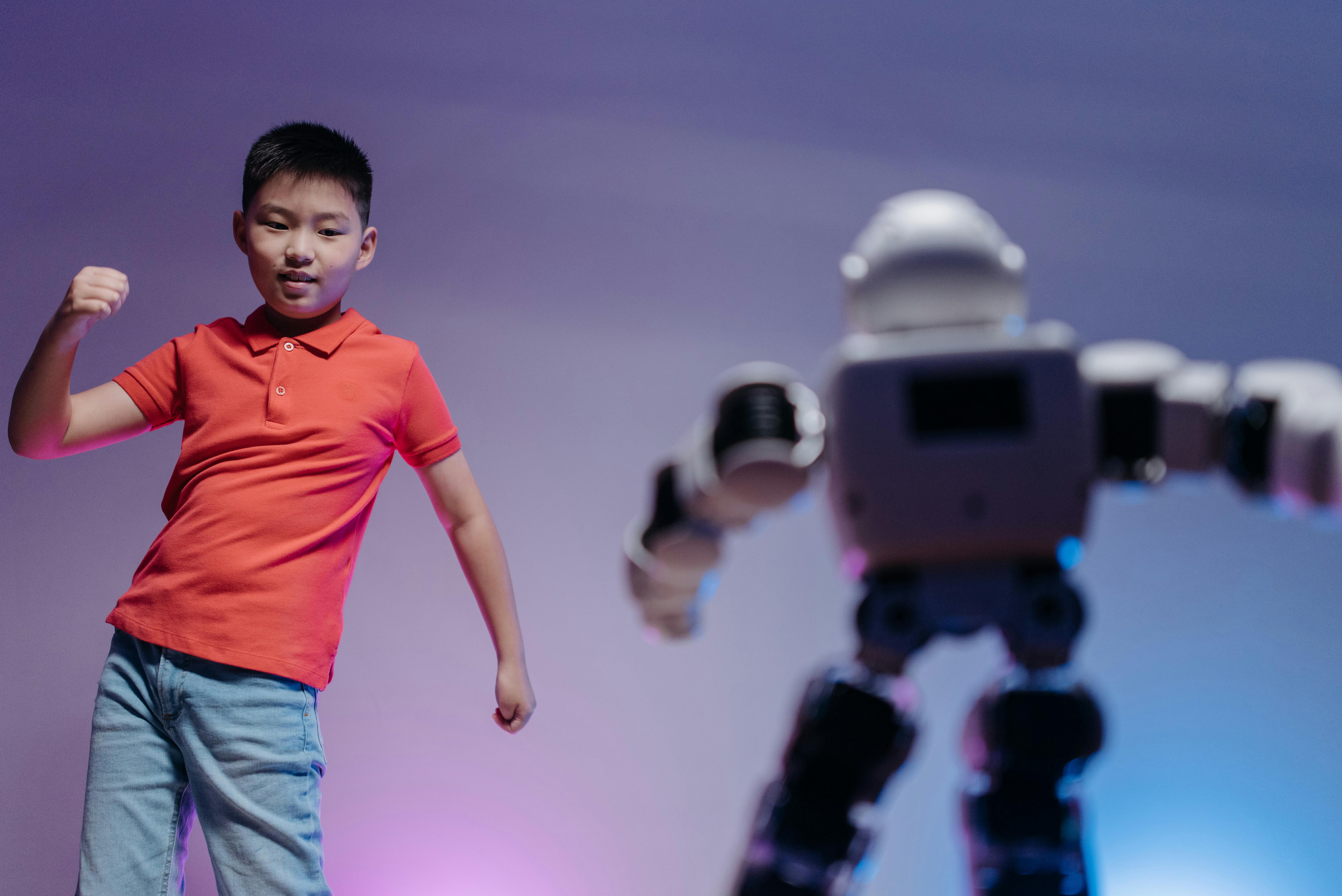
A human controlling a robot remotely performs well or badly depending almost entirely on delay. The tolerable amount is small, and it is consumed by many stages before the network is considered.
Human control degrades sharply with delay
People compensate for small delays without noticing, adjusting their internal expectations of how a system responds.
Beyond a modest threshold that adaptation fails, and operators begin to overcorrect, producing oscillation as they respond to information that is already out of date.
The threshold is tighter for tasks involving contact than for free movement, because contact forces build quickly and cannot be undone once applied.
The budget is spent before transmission
A camera exposes, reads out and encodes an image, each step adding time. Compression in particular trades delay for bandwidth.
At the other end, decoding and display add further stages, and a display refreshing at a fixed rate can hold a finished frame briefly before showing it.
These local costs frequently exceed the network contribution over short distances, which is why simply improving the connection often changes little.
Jitter is worse than steady delay
A constant delay can be learned. A delay that varies unpredictably cannot, because the operator's compensation is wrong in a different way each time.
Systems therefore sometimes add artificial delay to smooth variation, accepting a worse average in exchange for consistency.
The same reasoning explains why wireless links, which vary with interference and movement, are harder to operate over than wired ones of equal average latency.
Force feedback tightens the requirement
Sending forces back to the operator's controls creates a loop through both the robot and the human, and loops with delay become unstable.
Stability can be restored by reducing the strength of the feedback, but that weakens exactly the sensation the feature exists to provide.
Control approaches that guarantee stability under delay exist and are widely used, though they change how the interaction feels in ways operators must adjust to.
Autonomy is used to absorb the delay
Rather than transmitting every command, many systems have the operator specify an intent that the robot executes locally with its own fast control loop.
This shifts the timing requirement onto the robot, where the loop is short, and leaves the human supervising at a pace delay does not disrupt.
Such shared control is now the standard approach for links where round-trip time is large enough that direct manual control is impractical.