Robotics
Teaching A Robot A New Task On The Floor
Reprogramming an industrial arm is rarely coding from scratch; it is a mix of guided demonstration, waypoint editing and tolerance tuning performed by the plant's own staff.
Most changes to a working robot are made by technicians, not engineers with a software background. How that is possible explains a great deal about why automation spreads unevenly across American plants.
Programming by showing rather than writing
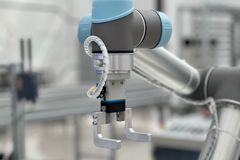
The common method is to move the arm to a position and record it. That is done with a handheld pendant, or by grasping the arm directly and guiding it where it should go.
The recorded positions become waypoints, and the controller interpolates motion between them. A task is therefore a sequence of remembered poses plus instructions about what to do at each one.
This is why a shop can retask an arm in an afternoon for a new part while a genuinely new capability takes months.
The hard part is everything around the motion
Moving is easy; knowing when to move is not. The program must wait for a signal that a part is present, that a fixture has clamped and that the previous station has cleared.
Those interlocks come from sensors and from the machines around the robot, and most of the programming effort goes into handling the states where something did not happen.
A cell that works perfectly when everything goes right is not finished. The exceptions are the work.
Tolerance is tuned, not specified
A part never arrives in exactly the taught position. The program either constrains the part with fixtures until it does, or uses sensing to adjust the taught path.
Fixturing is cheaper and more reliable but locks the cell to one part shape. Sensing is flexible and introduces a new set of failure modes that must be tuned on real parts.
Most plants choose fixturing wherever the product is stable, which is why high-mix work resists automation longer than high-volume work.
Simulation shortens commissioning but does not replace it
Offline tools let a program be built against a model of the cell before hardware exists. That catches reach problems and collisions while they are still cheap to fix.
What the model does not contain is the real position of the fixture, the flex in the tooling and the parts that are slightly out of spec. Those are found on the floor.
The practical value of simulation is that it moves weeks of work earlier, not that it removes them.
Who owns the program decides the payback
If only the outside integrator can change the program, every product change becomes a purchase order and a wait. Utilization falls and the cell ages badly.
Plants that train their own maintenance staff to edit waypoints and interlocks recover far more from the same hardware. The skill is closer to setting up a machine tool than to software engineering.