Robotics
Path Planning And Why Robots Move Strangely
The odd routes and pauses robots produce come from planning algorithms balancing safety margins, computation limits and uncertainty rather than from mechanical constraints.
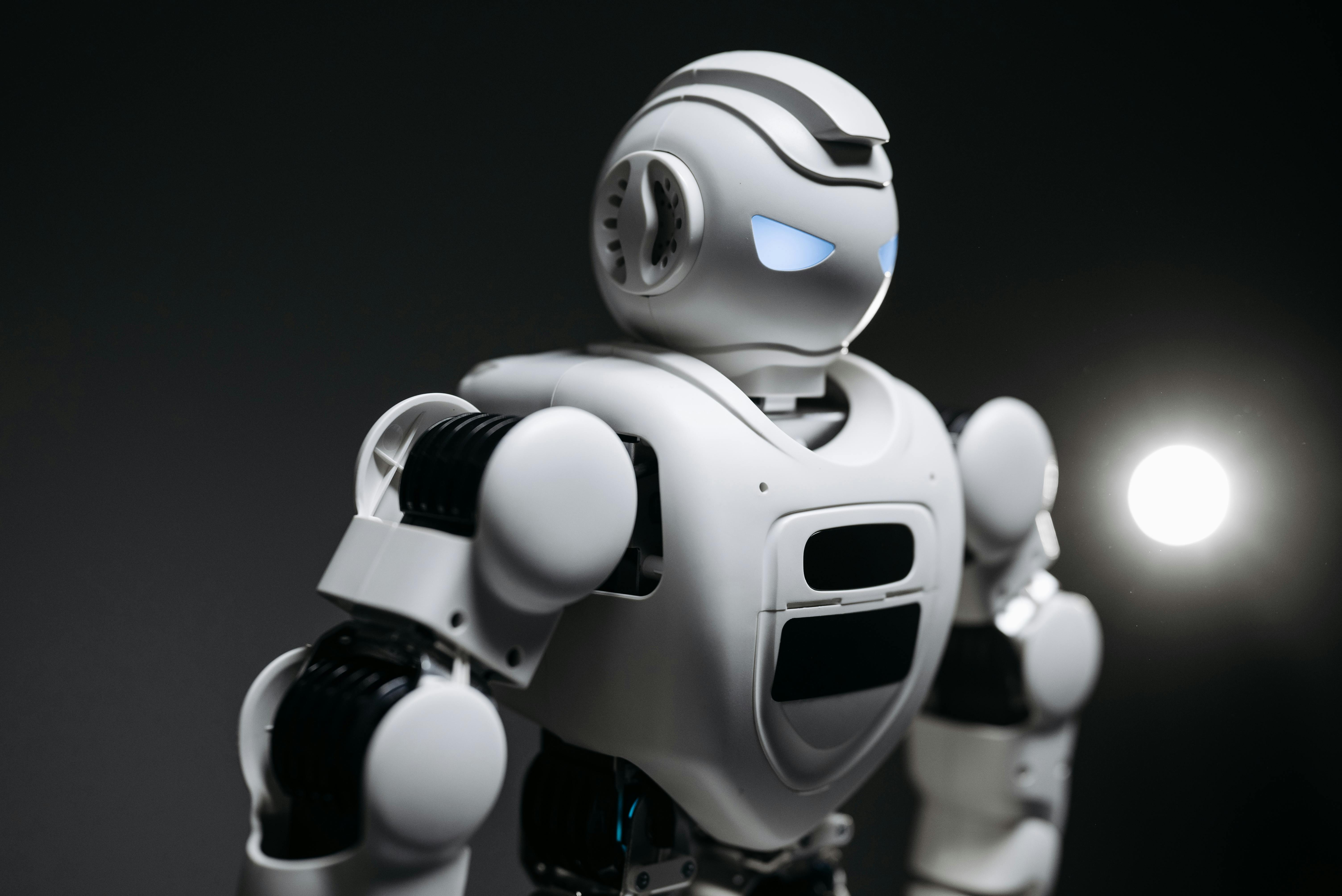
Robots often take routes a person would not choose, stopping unexpectedly or swinging wide around obstacles. These behaviours come from how paths are computed rather than from any physical limitation.
Planning happens in configuration space
A planner does not reason about the world as a picture. It works in a space where each point represents a complete pose of the machine.
Obstacles in the physical world become complicated regions in that space, and a route that looks direct on the floor may correspond to a difficult path through it.
For an arm with many joints, this space has too many dimensions to search exhaustively, so planners sample it rather than examining it completely.
Sampling produces valid but inelegant routes
Randomised planners find a path by testing connections between sampled poses, which reliably produces a solution but not the shortest or smoothest one.
The result frequently contains unnecessary detours, which is why a smoothing step usually follows, trimming the path where a direct connection is safe.
Time spent smoothing competes with time spent planning, and under a deadline the planner returns whatever it has, which is why haste produces visible awkwardness.
Safety margins are inflated deliberately
Because position estimates carry error, planners treat obstacles as larger than they are and the robot as larger than it is.
The margin must cover sensor error, control error and the possibility that something has moved since it was last observed.
Generous margins are the reason a machine may refuse a gap it would physically fit through, which frustrates operators who can see the clearance.
Replanning creates hesitation
When a person walks into a planned route, the robot must find a new path, and it stops or slows while that computation completes.
If the person then moves again, the cycle repeats, producing the stuttering behaviour familiar from shared warehouse and hospital spaces.
Predicting where people will go reduces this considerably, though prediction introduces its own errors and must fail safely when it is wrong.
Cost functions encode priorities explicitly
Planners minimise a cost that combines distance, time, energy, smoothness and proximity to obstacles, weighted according to what the designer values.
Changing those weights changes behaviour visibly, and much of the tuning during commissioning consists of adjusting them until motion looks acceptable.
What appears to be a bug is therefore often a stated preference working exactly as configured, which is why complaints about robot motion are frequently resolved in settings rather than code.