Energy
Curtailment And Why Clean Power Gets Thrown Away
Wind and solar output is sometimes deliberately reduced because the grid cannot absorb it, and the reasons are usually about transmission and timing rather than oversupply.

Renewable generators are sometimes instructed to produce less than they could, or paid to stop entirely. The reasons are structural, and they reveal where a power system's real constraints sit.
Generation and demand must match instant by instant
A grid has almost no storage inherent in it, so every unit generated must be consumed immediately or the system frequency moves away from its target.
When available renewable output exceeds what can be used or stored, some of it must be reduced, regardless of how cheap it is to produce.
This is not waste in the sense of inefficiency; it is the system operator maintaining balance with the tools available at that moment.
Transmission limits cause most curtailment
Wind and solar farms are built where the resource is strong, which is frequently far from where demand is concentrated.
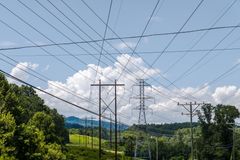
The lines connecting them have finite capacity, and when generation in a region exceeds what those lines can carry, output must be reduced locally even while other regions need power.
This is why curtailment often coincides with high prices elsewhere on the same system, which appears contradictory until the network constraint is accounted for.
Minimum generation requirements set a floor
Some conventional plants cannot reduce output below a certain level without shutting down, and restarting them takes hours and costs money.
Operators may keep such plants running through a period of high renewable output because they will be needed shortly afterwards.
The system also requires certain technical services traditionally provided by large rotating machines, which historically meant keeping some of them online.
Storage and flexible demand reduce the need
Batteries absorb surplus generation and release it later, converting a curtailment event into a shift in timing rather than a loss.
Loads that can move, including some industrial processes and vehicle charging, achieve the same effect without any storage hardware at all.
Both are limited by scale and by whether the surplus and the flexible demand sit on the same side of a transmission constraint.
Some curtailment is economically rational
Building enough transmission to carry every possible peak would mean expensive infrastructure sitting idle for most of the year.
Accepting that a small share of output will be curtailed during rare conditions can be cheaper overall than eliminating it entirely.
The judgement is about how much, and rising curtailment volumes are a signal that the network has fallen behind the generation connected to it.