Energy
Grid inertia and why frequency matters
A power system stays up because enormous spinning masses resist change, and replacing them with electronics required rethinking how stability works.

Grid frequency is the most closely watched number in a power system, and understanding why explains a genuine engineering challenge in the transition.
What frequency represents
In a conventional system, generation comes from synchronous machines — turbines spinning at a speed locked to grid frequency.
Every generator on the network turns in step. Frequency is a direct measure of their rotational speed.
If demand exceeds generation, the machines are loaded more heavily and slow slightly, and frequency falls. If generation exceeds demand, they speed up.
Which makes frequency a continuous, system-wide, instantaneous measure of supply-demand balance. That is why it is monitored so closely and why it must be held within a narrow band.
Inertia
The rotating masses store kinetic energy — a large turbine and generator assembly is very heavy and turns fast.
When a generator trips off unexpectedly, that stored energy is released automatically, slowing the frequency decline and buying time for control systems to respond.
This is inertia, and it is a free physical service that nobody had to design. It simply came with the machines.
Its practical value is time: without it, frequency falls faster after a loss, and the response must be quicker.
Why the transition changes this
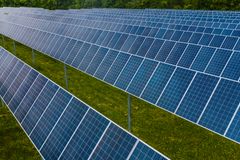
Wind and solar connect through power electronic inverters. They are not mechanically coupled to grid frequency and provide no inherent inertia.
As the share of inverter-connected generation rises and synchronous machines retire, system inertia falls.
The measurable consequence is a faster rate of change of frequency after a fault, which stresses protection systems and reduces the time available to respond.
This is a genuine, quantified engineering problem, and it has already produced operational incidents in systems with high renewable penetration.
The responses
Faster frequency response. If less inertia means less time, respond faster.
Batteries are extremely good at this — they can go from zero to full output in well under a second, far faster than any thermal plant. Several grids now procure sub-second frequency response as a distinct product, and batteries dominate it.
Synthetic or virtual inertia. Inverters programmed to emulate the response of a spinning machine, drawing on battery storage or on the kinetic energy in a wind turbine rotor.
This is now standard practice in grid codes in several jurisdictions.
Grid-forming inverters. The more fundamental change.
Conventional grid-following inverters measure the existing grid voltage and synchronise to it. They cannot establish a grid on their own; they need something else to follow.
Grid-forming inverters create a voltage waveform themselves, behaving like a voltage source rather than a current source. They can operate without synchronous machines present and can support and restore a network.
The technology is proven at increasing scale, and transitioning a whole system is a substantial engineering programme.
Synchronous condensers. A pragmatic interim measure: a large machine spinning with no fuel input, connected to provide inertia and short-circuit strength without generating.
Several grids have installed these, including by converting retired generators. Unglamorous and effective.
System strength
A related property that gets less attention and matters as much.
Synchronous machines provide short-circuit current during faults, which allows protection equipment to detect and clear them.
Inverters current-limit to protect themselves, so they contribute far less fault current.
In areas with weak system strength, inverters can interact adversely with each other and with the network, producing oscillations. This has caused real operational restrictions on connecting new generation in some regions.
It is one of the less publicised reasons connection queues are long.
Black start
Restoring a grid from complete shutdown.
Traditionally provided by plants that can start without external power — hydro and some gas units — which then energise the network progressively.
Grid-forming inverters and batteries can now provide this, and demonstrations have been performed. It is a capability that must be deliberately procured and tested rather than assumed.
Why this matters for the wider argument
It is a real technical challenge, frequently cited as a reason renewables cannot dominate a grid, and it has known engineering solutions.
The solutions cost money and require grid code changes, procurement of new services and coordinated planning.
Which puts it in the same category as most of the transition: not physically prevented, requiring competent institutional execution, and progressing at the pace institutions manage rather than the pace the technology allows.