Energy
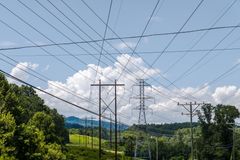
Transmission is the bottleneck nobody photographs
A great deal of clean generation is built, connected late, and curtailed — because the wires to move it do not exist.

Generation gets the attention and the subsidies. Moving the electricity is the part that determines whether any of it is useful, and it is failing in most countries.
The symptoms
Interconnection queues. Projects waiting years for a connection study and an agreement, with queues in several markets containing more capacity than the entire existing generation fleet.
Much of that queue will never be built — speculative applications clog the process — which itself slows the projects that are real.
Curtailment. Wind and solar farms instructed to reduce output because the network cannot carry the power, while generation elsewhere runs to meet demand.
Some curtailment is economically rational. Persistent, structural curtailment means the wires are the constraint.
Locational price divergence. Wholesale prices differing sharply between regions because power cannot flow freely between them — sometimes negative where generation is stranded and high a few hundred kilometres away.
Constraint payments, where consumers pay generators not to generate and other generators to fill in. These have become substantial sums in several markets and are a direct measure of missing transmission.
Why transmission is not built
Rarely engineering. Almost always permitting, cost allocation and politics.
Permitting. A long line crosses many jurisdictions, each with its own approval process and each able to delay or block.
Environmental review, land acquisition and legal challenge routinely extend timelines to a decade or more.
Cost allocation. The genuinely hard problem.
A line benefits generators at one end, consumers at the other, and the system as a whole through reliability. Deciding who pays is contentious, and regulators have struggled to produce methods that survive challenge.
Projects have failed at this stage rather than at any technical one.
Local opposition. Overhead lines are visible and unpopular. Underground cable is several times more expensive for alternating current transmission, which makes it a real trade rather than an easy concession.
Planning horizons. Transmission takes ten to fifteen years; generation takes two to four. Planning processes designed around incremental reinforcement do not anticipate the generation mix changing wholesale.
Why more transmission reduces cost
The argument is stronger than it is usually made.
Weather decorrelation. Wind output at sites hundreds of kilometres apart is much less correlated than at neighbouring sites. Connecting them smooths aggregate output substantially, reducing the storage and backup the system needs.
Load diversity. Peak demand occurs at different times across time zones and climates. A larger connected area has a lower combined peak relative to total capacity.
Resource sharing. Reserve capacity held for contingencies can be shared, so less of it is needed in total.
Studies consistently find that transmission expansion is among the cheapest ways to integrate high shares of variable generation — generally cheaper per unit of benefit than the equivalent storage.
The technologies
High-voltage direct current for long distances and for subsea links. Lower losses over distance than alternating current, controllable power flow, and the ability to connect asynchronous networks.
Higher converter station cost, which is why there is a breakeven distance below which alternating current wins.
Grid-enhancing technologies, the underused category.
Dynamic line rating adjusts a line's capacity based on actual weather rather than a conservative static assumption — a line in cold wind can carry substantially more than its rated capacity.
Advanced power flow control devices push power onto underused paths.
Reconductoring with advanced conductors raises capacity on existing towers and rights of way, avoiding the permitting problem entirely.
These are cheap, fast and deliver a meaningful fraction of the benefit of new lines. Adoption has been slow largely because regulated returns reward capital expenditure on new assets more than operational improvements to existing ones.
That is an incentive problem with a straightforward regulatory fix.
What would actually change things
Reforming interconnection to process projects in clusters rather than sequentially, with deposits that discourage speculative applications.
National or regional planning authority for lines that cross jurisdictions, with time limits on review.
Cost allocation methods that survive legal challenge, agreed before projects are proposed rather than litigated after.
Regulatory frameworks that reward capacity delivered rather than capital deployed, so grid-enhancing technologies compete fairly with new build.
None of that is technology. All of it is why the wires are not there.