Space
Attitude Control And How A Spacecraft Points
Pointing a satellite accurately without pushing against anything requires spinning wheels, magnetic torque and occasional thruster firings, and each method has a limit that shapes mission design.
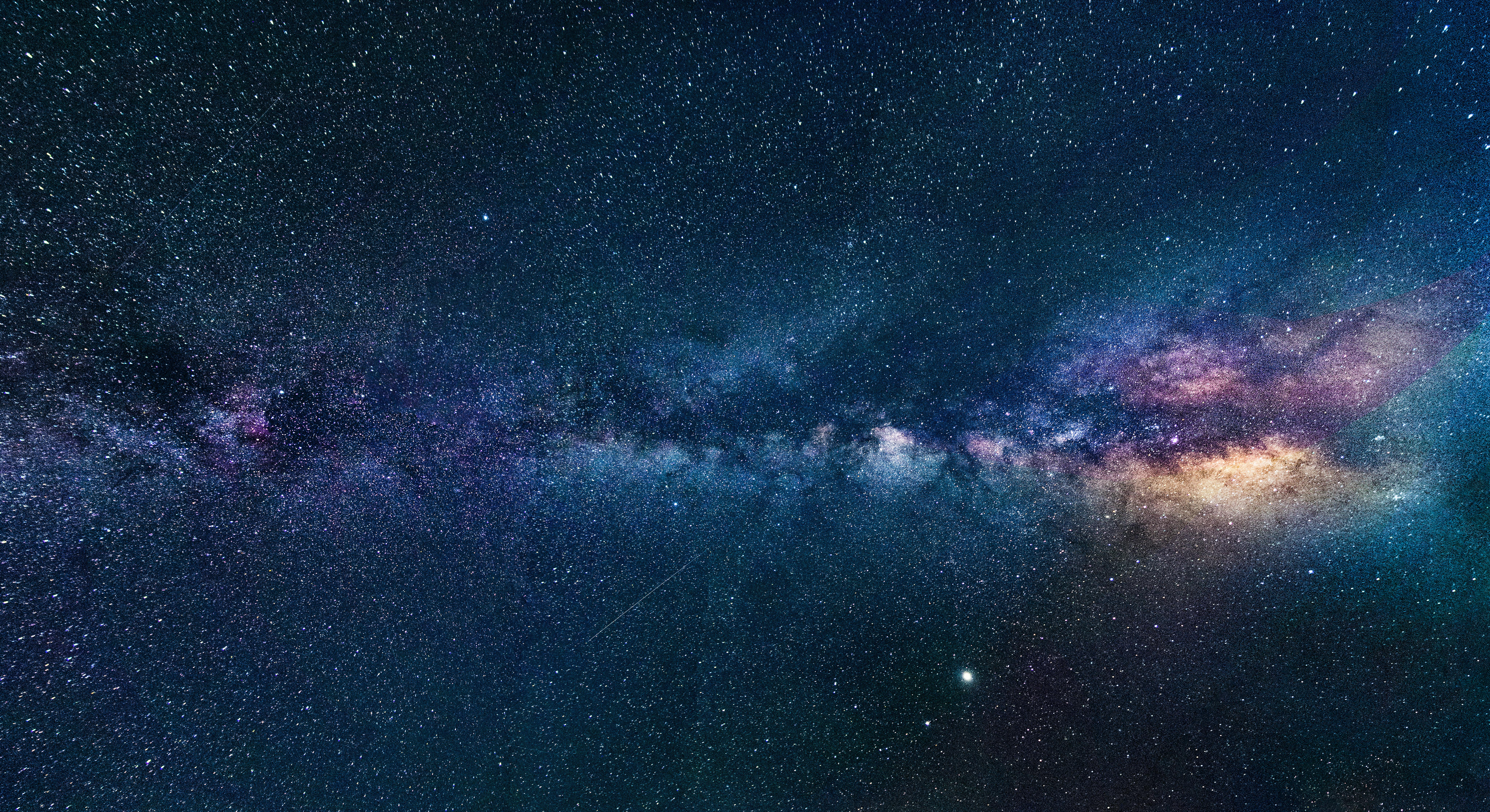
A spacecraft has nothing to push against, yet it must aim antennas, cameras and solar arrays precisely for years. The mechanisms that make this possible are among the most constrained systems aboard.
Reaction wheels trade rotation for rotation
Spinning a wheel inside the spacecraft causes the body to rotate the other way, because total angular momentum is conserved. Changing wheel speed therefore steers the vehicle without expending propellant.
Wheels give fine, continuous control and are the workhorse of precision pointing, which is why observatories and imaging satellites depend on them.
Their limitation is saturation: persistent disturbances push wheels toward maximum speed, after which they can no longer absorb momentum in that direction.
Something must remove accumulated momentum
Small torques from atmospheric drag, solar radiation pressure and gravity gradients act constantly and always in a biased direction, so momentum builds up.
In low orbit, magnetic torque rods push against the Earth's field to bleed it off, using electricity rather than propellant, which suits long missions.
Farther out the field is too weak, so thrusters perform the same job and the available propellant becomes a limit on mission life independent of the payload.
Knowing the orientation is a separate problem
Control requires measurement. Star trackers photograph the sky and match the pattern against a catalog to determine orientation with high precision.
Sun sensors, horizon sensors and magnetometers provide coarser information that is robust and cheap, and gyroscopes track short-term change between updates.
These are combined so that a temporary loss of one, such as a star tracker blinded by the sun, does not leave the vehicle unaware of which way it faces.
Flexible structures fight the controller
Large solar arrays and antennas bend and oscillate. A control system that responds quickly can excite those modes, producing a wobble that degrades pointing rather than correcting it.
Designers therefore limit how fast the controller may act, which caps how quickly a spacecraft can slew between targets.
For an observatory, that constraint directly determines how many targets can be observed per day, which is a scientific cost imposed by structural dynamics.
Why failure here ends missions
A spacecraft that cannot point loses its antennas and its solar power, and without power it cannot recover. Attitude control failures are among the most common causes of total loss.
Redundancy is therefore heavy in this subsystem, with spare wheels mounted in skewed orientations so that any three of four can maintain full control after a failure.