Neurotech
Why Brain Signals Change From Day To Day
Neural recordings shift over time even with a stable implant, which means decoders trained on one session often perform poorly on the next without recalibration.
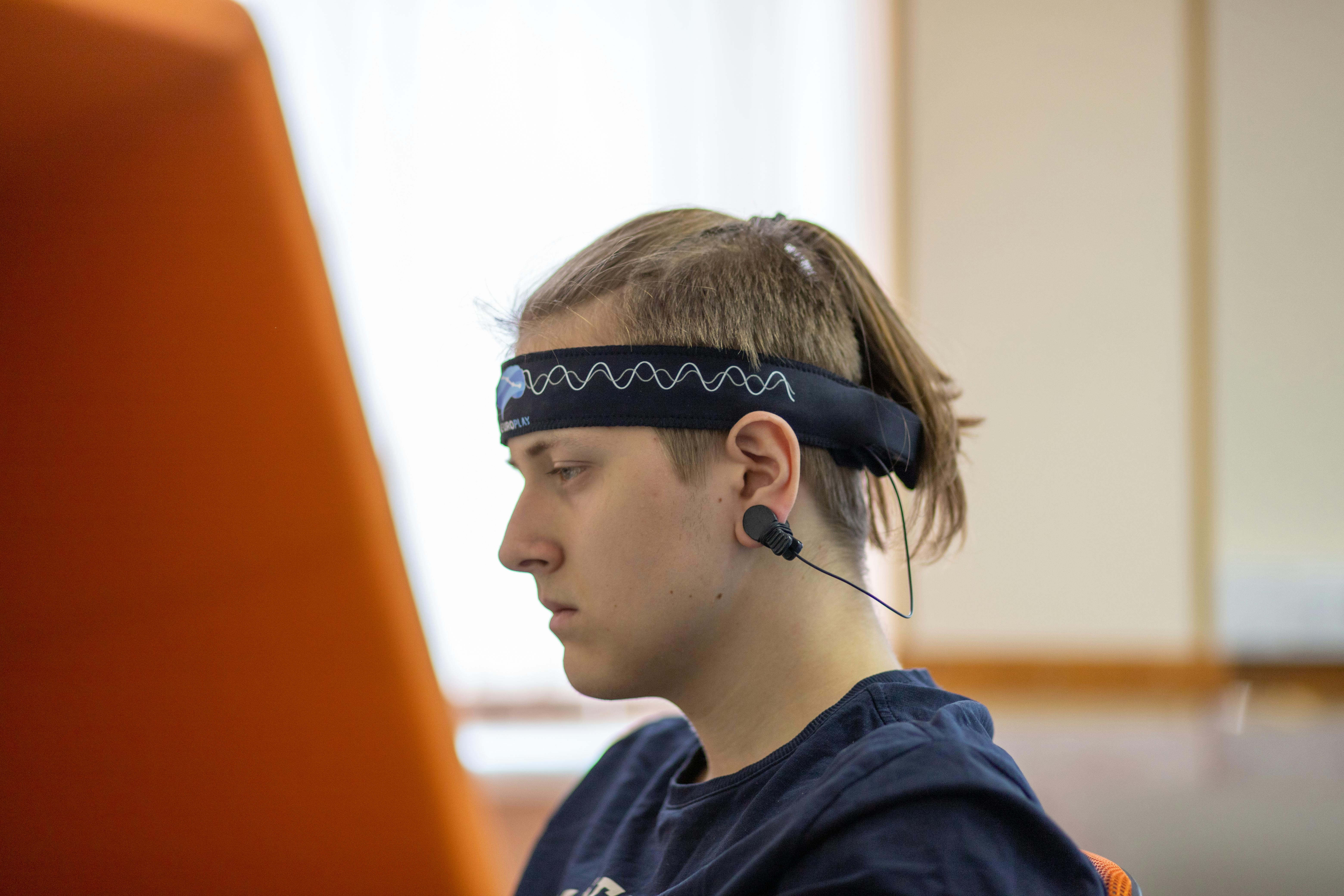
A decoder that works well one day frequently performs worse the next. The underlying signals are not stable, and managing that instability is a central practical problem for any interface.
The recording itself moves
Small relative motion between electrode and tissue changes which neurons dominate a channel, so the same electrode may report a different population over time.
Gradual tissue response alters impedance and signal amplitude, meaning the scale of the recording changes even when the source does not.
Neither change is a fault, and both occur in properly functioning implants, which is why stability cannot be engineered away entirely.
Neural activity is genuinely variable
Attention, fatigue, medication, caffeine and time of day all affect brain activity, and those effects appear in recordings alongside the intended signal.
A person performing the same task twice does not produce identical neural patterns, and the differences can be as large as those between conditions.
Decoders must therefore separate variation that matters from variation that does not, using data that contains both mixed together.
Learning happens on both sides
A user operating an interface adapts to it, changing their strategy as they discover what works, which changes the signals the decoder receives.
If the decoder is simultaneously adapting to the user, both systems are moving, and they can either converge usefully or chase each other unproductively.
Managing this co-adaptation is a design question, and many systems deliberately fix one side for periods to let the other settle.
Recalibration costs user time
The straightforward remedy is a short calibration session at the start of each use, collecting fresh data to update the decoder.
This works but consumes time and attention before any useful task begins, and it becomes a significant burden for someone using the device daily.
Reducing that overhead is a major aim of current work, because it affects whether a system is tolerable in ordinary life rather than in a laboratory.
Stable structure underlies the variation
Although individual channels change, the overall geometry of population activity often remains more consistent across sessions than any single recording does.
Methods that align new data to that underlying structure can restore performance without a full recalibration, using only brief unlabelled recordings.
This approach has made long-term decoder stability considerably more achievable, though it depends on enough of the population being recorded to define the structure.