Neurotech
Neurofeedback And What It Can Reasonably Do
Training people to alter their own brain activity has a genuine basis, though the gap between demonstrating control and producing lasting benefit remains substantial.
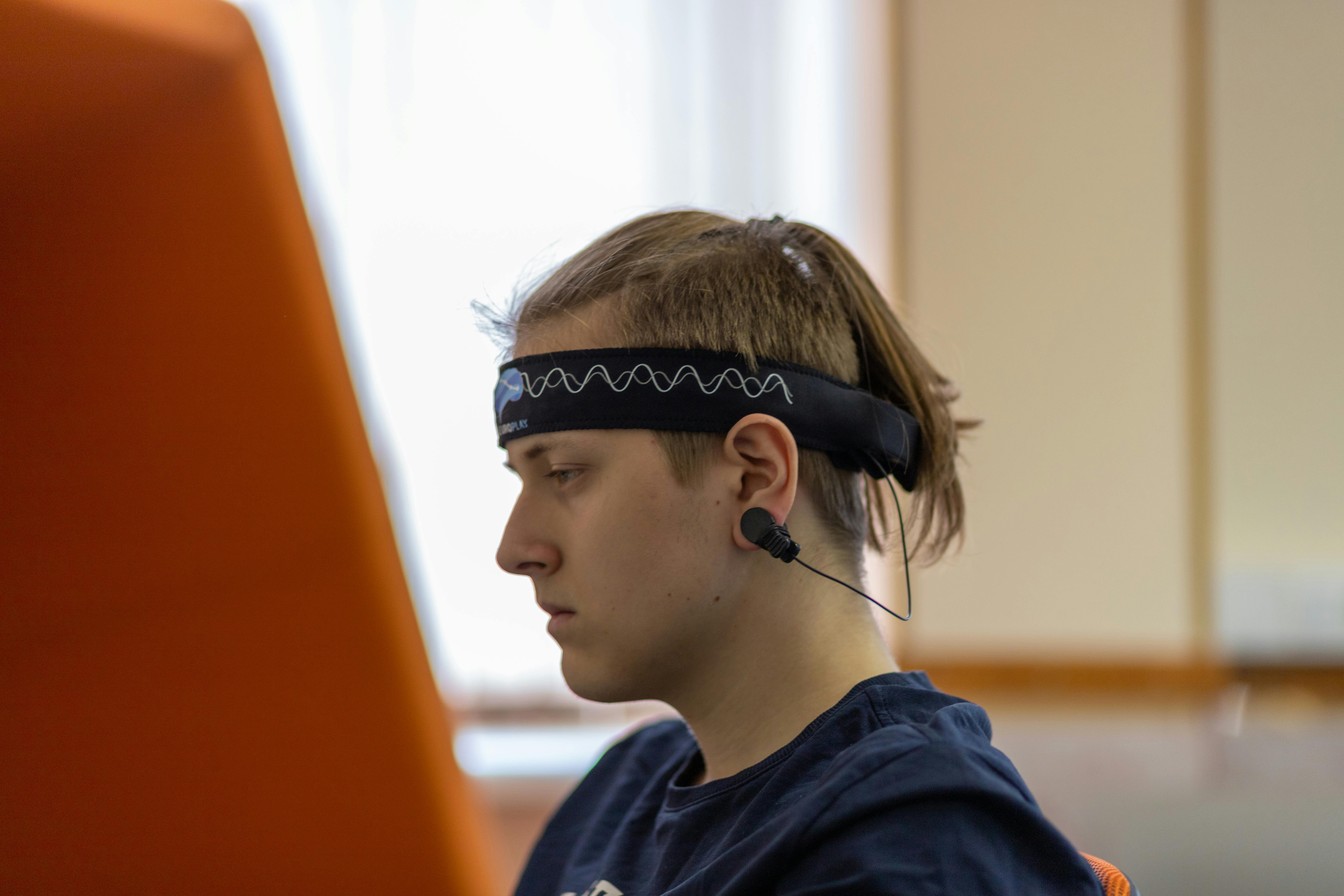
Neurofeedback presents a person with a live measure of their own brain activity so they can learn to change it. The mechanism is real, and what it achieves clinically is more contested than the concept suggests.
The method depends on a closed loop
A signal is recorded, processed into a simple representation such as a bar or a tone, and presented back within a fraction of a second.
The person then attempts strategies and observes which move the display, gradually acquiring control much as one learns any skill with feedback.
Crucially, the learning is implicit. Participants often cannot describe what they are doing, which makes the process difficult to teach directly.
Demonstrating control is easier than producing benefit
Many people can learn to shift a measured quantity within a few sessions, and that shift is genuine rather than an artefact of the display.
Whether changing that quantity improves anything the person cares about is a separate question, and evidence varies considerably by condition and by protocol.
A protocol may reliably train a signal that turns out not to be causally connected to the symptom it was chosen to address.
Expectation effects are unusually strong
Sessions involve attention, structure, a clinician and a sense of agency, all of which improve reported outcomes independently of any neural change.
Controlling for this requires comparison against sham feedback, where participants receive a plausible but unrelated signal, and such designs are difficult to run well.
Studies including proper controls generally report smaller effects than uncontrolled ones, which is the usual pattern in this kind of research.
Signal choice determines what is trained
Scalp recordings capture broad rhythms, and a protocol targets specific frequency bands or the relationship between them at particular locations.
Different clinics use different targets for the same presenting problem, which makes results hard to compare and complicates any pooled assessment.
Imaging-based feedback can target specific structures more precisely, at far greater cost and with much less availability outside research settings.
Durability is the open question
Control acquired during sessions may fade once feedback is removed, and how long any change persists depends on the protocol and the individual.
Follow-up over long periods is comparatively rare, so claims about lasting change rest on a thinner evidence base than claims about immediate effects.
Anyone considering it for a diagnosed condition should discuss it with a clinician who can weigh it against established treatments rather than in isolation.