Neurotech
Brain-computer interfaces: where the science actually is
Decades of academic work, a small number of implanted participants, and a gap between demonstrated results and marketing that is worth measuring.

Brain-computer interfaces read neural activity and convert it into control signals. The field is older than the current attention suggests, and the demonstrated results are genuinely remarkable within a narrow scope.
What has actually been demonstrated
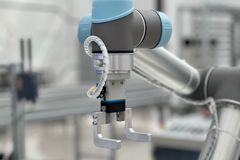
Research groups have, over roughly two decades, shown that participants with paralysis using implanted electrode arrays can control a cursor, operate a robotic arm to grasp objects, and produce text at meaningful rates.
More recently, speech decoding work has reconstructed intended speech from neural activity in participants who cannot speak, at rates substantially faster than earlier cursor-based typing.
These are real results, peer reviewed, replicated across groups, and life-changing for the participants involved.
The population is small. Across all academic implanted BCI research, the number of participants with long-term implants is in the tens, not the thousands.
The main approaches
Penetrating microelectrode arrays. Rigid arrays of small electrodes inserted into cortex, recording from individual neurons and small populations.
Highest signal quality. The long-standing problem is chronic stability: the immune response forms scar tissue around electrodes, and signal quality degrades over months to years.
Flexible thread electrodes, the approach several commercial efforts have pursued, inserted by a robot to avoid vasculature.
The hypothesis is that flexible substrates reduce the chronic tissue response. Whether that holds over years in humans is the central open question.
Electrocorticography, electrode grids on the cortical surface rather than penetrating it.
Lower spatial resolution, better long-term stability, less invasive. Much of the speech decoding work uses this.
Endovascular approaches, delivering a stent-mounted electrode array through the vasculature to sit against the vessel wall adjacent to motor cortex.
Avoids craniotomy entirely, which substantially changes the risk profile. Signal quality is lower than penetrating arrays. Early-stage clinical trials have reported participants using it for basic digital control.
Non-invasive methods — EEG and functional near-infrared spectroscopy — read through the skull. Safe, cheap and severely limited in bandwidth by the physics of measuring through bone and tissue.
Consumer devices in this category should be assessed against that limit, which is fundamental rather than a matter of engineering effort.
The problems that remain
Longevity. The most important. An implant that works brilliantly for a year and degrades is not a treatment; it is a study.
Signal drift. The mapping between neural activity and intent changes over days, requiring recalibration. Adaptive decoders address this and it remains an active problem.
Bandwidth. Current systems record from a tiny fraction of relevant neurons. Scaling channel count raises power, heat and data problems.
Surgical risk. Any intracranial procedure carries risk of infection, haemorrhage and seizure. That risk is justifiable for someone with severe paralysis and sets a high bar for any broader application.
Regulatory path. Implanted neural devices face a demanding approval process, appropriately. Timelines are measured in years.
Signal quality and what it limits
Worth stating in numbers, because the discussion is usually qualitative.
Information rate from a neural interface is bounded by how many independent signals can be recorded and how reliably each is decoded.
Current implanted systems record from a few hundred channels, and the useful control bandwidth extracted from them is measured in a handful of bits per second — enough for cursor control and for the speech decoding work described below.
Ordinary typing runs at a substantially higher rate, and speech higher still.
Which frames the engineering problem precisely: closing that gap requires either far more channels, or better decoding of the ones available, or both.
What is genuinely near
Restoring communication and basic device control for people with severe paralysis, locked-in syndrome or advanced motor neurone disease.
This is where the trials are, where the benefit is largest, and where the risk-benefit calculation clearly supports proceeding.
What is not near
Memory enhancement, direct knowledge transfer, high-bandwidth communication between people, and any application in healthy individuals.
These require understanding neural coding at a level nobody currently has. Reading motor intent works because motor cortex has a relatively well-characterised relationship between activity and movement. Nothing comparable exists for semantic memory.
Claims in this territory should be read as aspiration rather than roadmap.
How to read an announcement
Ask how many participants, for how long, and with what outcome measure.
Ask whether the result is published and peer reviewed, or presented in a company communication.
Ask what the comparison is — a decoding rate is meaningless without knowing what the participant's alternative was.
And note that a first-in-human implant is a beginning, not a product. The interesting data arrives in years two and three.