Neurotech
Neuromodulation beyond the brain
Stimulating peripheral nerves and the spinal cord is less dramatic than brain implants and has reached far more patients.
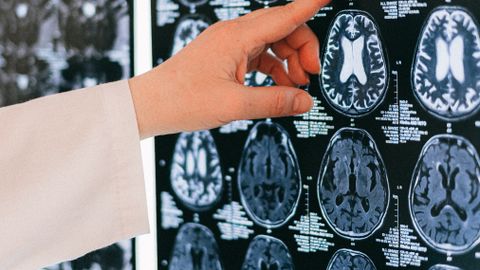
Neurotechnology discussion concentrates on the brain. The larger installed base of neural devices is elsewhere in the nervous system, and the results are instructive.
Spinal cord stimulation
Electrodes placed in the epidural space deliver stimulation to the dorsal columns of the spinal cord.
The original indication is chronic neuropathic pain, particularly persistent pain after spinal surgery and complex regional pain syndrome.
The traditional explanation invokes gate control theory — stimulating large sensory fibres reduces transmission of pain signals — and the mechanism is more complicated than that and not fully settled.
What is established is that it helps a substantial proportion of carefully selected patients, that patient selection is again decisive, and that a trial period with a temporary lead before permanent implantation is standard practice for exactly that reason.
Newer waveforms — high-frequency and burst stimulation — produce analgesia without the tingling sensation that conventional stimulation causes, which improved tolerability considerably.
Restoring movement after spinal cord injury
The most striking recent work in the field.
Epidural electrical stimulation of the lumbar spinal cord, combined with intensive rehabilitation, has enabled participants with severe spinal cord injury to regain voluntary movement and, in several cases, supported walking.
The insight is that many injuries leave some residual connectivity, and that stimulation raises the excitability of spinal circuits below the injury enough for weak descending signals to produce movement.
More recent work has combined this with a brain implant, creating a digital bridge that reads motor intention from cortex and delivers matched stimulation to the spinal cord.
Participant numbers are very small. The results are genuine and peer reviewed, and they represent the strongest evidence that this class of intervention can restore function rather than only substitute for it.
Vagus nerve stimulation
A cuff electrode on the vagus nerve in the neck, connected to a pulse generator.
Approved for drug-resistant epilepsy and for treatment-resistant depression in some jurisdictions.
Effects in epilepsy are typically a reduction in seizure frequency rather than elimination, which is a meaningful outcome for patients who have exhausted medication.
The depression indication has a more contested evidence base, with the effect emerging slowly over months, which makes trial design difficult.
Paired vagus nerve stimulation combined with rehabilitation has more recently received approval for improving upper-limb function after stroke — the rationale being that stimulation timed with movement enhances plasticity.
Non-invasive transcutaneous vagus stimulation, applied at the ear or neck, is widely marketed for a range of conditions. The evidence base is much weaker than for the implanted form and should be assessed separately rather than by association.
Sacral and tibial nerve stimulation
Used for urinary and faecal incontinence and overactive bladder, with an established evidence base and a large treated population.
Unglamorous, and among the clearest quality-of-life improvements the field delivers.
Cochlear implants
The most successful neural prosthesis by a considerable margin, with hundreds of thousands of recipients.
An implanted electrode array stimulates the auditory nerve directly, bypassing damaged hair cells.
Outcomes vary and, for many recipients implanted early, include open-set speech understanding without lip reading.
Its history is the best available precedent for the field: early results were poor, critics argued the approach was misconceived, and sustained incremental improvement in electrode design, processing strategy and surgical technique produced a transformative device over decades.
It is also the clearest example of a neurotechnology raising genuine community objection — from parts of the Deaf community regarding cultural identity and consent for children — which is a reminder that clinical benefit and social acceptance are separate questions.
Retinal implants
A more cautionary case.
Devices stimulating the retina to provide crude visual perception have received approval, and several have been withdrawn commercially.
Recipients of discontinued devices have been left with implanted hardware that is no longer supported — which is the abandonment problem in its starkest form.
The field has taken the lesson seriously, and it should inform how any implanted device programme is evaluated.
What this record suggests
Peripheral and spinal interventions have delivered more clinical benefit to more people than brain implants, with lower risk.
Progress has come from decades of incremental refinement rather than breakthroughs.
Patient selection determines outcomes more than device specification.
And commercial failure of a device manufacturer is a clinical risk, not merely a business event.